
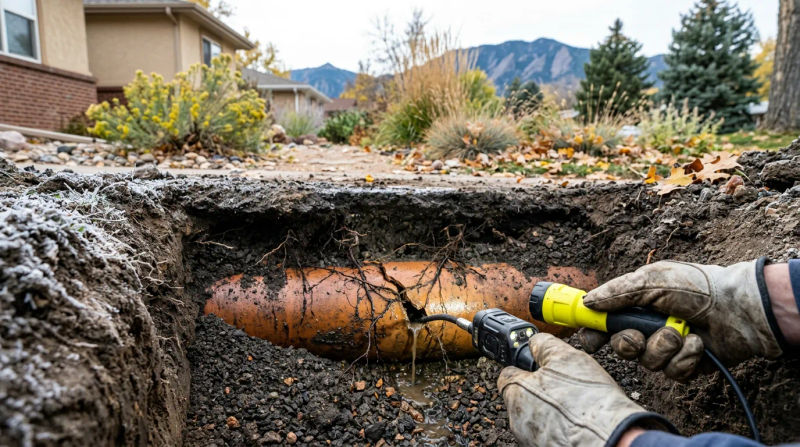
That one patch of grass near the sidewalk just won’t turn brown, even as the rest of your lawn prepares for a Lakewood winter. Or perhaps you’ve noticed your driveway has developed a new dip, or the water pressure inside your home isn’t what it used to be. These subtle changes can be easy to dismiss, but they are often the first whispers of a much larger problem brewing just a few feet beneath the surface: a failing underground water or sewer pipe. As a superintendent overseeing construction projects for over 15 years, I’ve seen how small, hidden leaks can escalate into major structural and financial headaches, especially as the ground begins to freeze.
Here in Lakewood, many of our charming neighborhoods feature homes from the post-war era, and the pipes that have served them faithfully for decades may be nearing the end of their functional lifespan. Before the first snows arrive and the ground hardens, it’s crucial to recognize the warning signs and understand the value of a timely underground pipe inspection.
Common Signs and Symptoms
Underground pipe failures rarely happen overnight. They typically begin as small issues that provide subtle clues. Paying attention to your property can help you catch a problem before it requires a major, emergency excavation. Here are some of the most common signs of a pipe leak Lakewood homeowners should watch for:
- Unusually Green or Boggy Patches in Your Yard: If a specific area of your lawn is suddenly greener and lusher than the rest, it might be getting extra water and nutrients from a leaking sewer or water line. You may also notice persistently damp soil or standing water.
- Sinkholes, Depressions, or Settling Pavement: A slow leak can wash away the soil supporting your lawn, walkway, or driveway, creating a void. This often manifests as a noticeable dip, sinkhole, or cracking in concrete and asphalt surfaces. This is particularly common in areas with mixed soil conditions like those found around Lakewood.
- A Sudden, Unexplained Drop in Water Pressure: If the flow from your faucets and showerheads seems weaker than usual and it's not a municipal issue, you could have a significant leak in your main water service line between the street and your house.
- Spikes in Your Water Bill: A water bill that suddenly jumps without a corresponding increase in usage is a classic red flag for a hidden leak. Even a small, steady drip underground can waste thousands of gallons of water over a billing cycle.
- Foul Odors in Your Yard or Basement: The smell of sewage is unmistakable. If you detect it in your yard or wafting up from a basement drain, it’s a strong indicator that your sewer line is cracked or broken.
- Frequent Drain Backups or Slow Drains: While a single clogged drain is often a localized issue, if multiple drains in your home (toilets, sinks, showers) are backing up or draining slowly, the problem likely lies in your main sewer line.
- New Cracks in Your Home’s Foundation: This is one of the more severe symptoms. A significant underground water leak can saturate and destabilize the soil beneath your home's foundation, causing it to shift and crack. On the classic Ranch-style homes from the 1950s, these cracks may appear on the slab foundation or in the brickwork.
What Causes This Problem
Underground pipes are built to be durable, but they aren’t invincible. Several factors, often working in combination, can lead to their eventual failure. Understanding these root causes helps explain why proactive inspection is so important, especially in established neighborhoods.
- Pipe Age and Material: Many homes in Lakewood were built in the 1950s and 1960s. The common pipe materials of that era, such as cast iron, clay tile, and even tar-impregnated wood fiber (Orangeburg) pipe, have a finite lifespan. Cast iron can corrode and rust from the inside out, while clay is brittle and susceptible to cracking under pressure.
- Tree Root Intrusion: This is one of the most common culprits our technicians encounter. Tiny tree roots seek out sources of water and can infiltrate pipes through minuscule cracks or loose joints. Once inside, they grow, expand, and act like a wedge, splitting the pipe open and causing blockages.
- Soil Shifting and Settlement: The freeze-thaw cycle is a powerful force. As fall turns to winter in Colorado, the moisture in the soil expands when it freezes and contracts when it thaws. This constant movement puts immense stress on buried pipes. Furthermore, a small initial leak can wash away soil, creating a void that causes the pipe to sag and eventually break under its own weight.
- Corrosion: Metal pipes, particularly older cast iron or galvanized steel, will naturally corrode over time. The rate of corrosion can be accelerated by soil chemistry and the mineral content of the water, eventually leading to thin walls and pinhole leaks that grow larger.
- Heavy Loads and Surface Activity: While pipes are buried to protect them, heavy vehicle traffic on a driveway or nearby street can cause vibrations and pressure that lead to cracks or joint separation over time.
When to Call a Professional
Recognizing the signs is the first step, but knowing when to act is critical. While a homeowner can plunge a single slow drain, diagnosing and repairing underground lines is a job for experienced professionals. The key question is when to inspect buried pipes before winter. The answer is as soon as you suspect a problem.
Waiting until a pipe completely fails in the middle of January can turn a manageable repair into a costly and disruptive emergency. The ground will be frozen solid, making excavation far more difficult, time-consuming, and expensive. Acting in the fall allows for a more organized and efficient process.
You should contact a professional for an underground line inspection Lakewood CO if you notice any of the seven signs listed above. Our trained crews use specialized diagnostic tools, most notably a sewer camera, to perform an underground pipe inspection. This involves feeding a high-resolution camera through your pipes to pinpoint the exact location and nature of the problem - be it cracks, corrosion, or root intrusion - without destructive, exploratory digging.
This diagnostic step is crucial. It allows a professional team to determine whether a simple spot repair is sufficient or if a larger section of the pipe needs replacement. It provides the clarity needed to plan a targeted, efficient excavation and repair before freezing temperatures complicate the work.
Conclusion
Your home's underground pipes are an essential but invisible part of its infrastructure. By the time problems become obvious, they have often been developing for months or even years. In Lakewood, with our mix of older homes and challenging soil conditions, proactive awareness is your best defense against a catastrophic failure.
Pay attention to your property this fall. Look for those subtle changes in your lawn, pavement, and water service. Addressing a small issue now, with a proper inspection and a planned repair, is far better than dealing with a flooded basement or a collapsed driveway in the dead of winter. Acting early saves you stress, money, and protects the structural integrity of your home.
If you notice any of these signs, contact a local excavation professional for an inspection.