
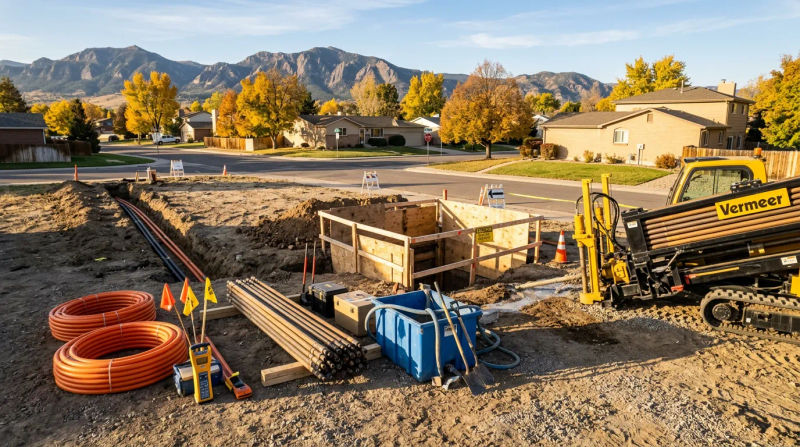
As a Senior Project Superintendent with over 15 years in the field, I know the first question on any homeowner's mind is, "What's this going to cost?" When it comes to complex work like running a new utility line under your driveway or yard, that question is even more critical. Homeowners in Arvada often need to install or replace underground lines for water, gas, or electrical conduit, but want to avoid tearing up their established lawns, mature trees, and concrete work. Directional boring is the perfect solution, but understanding the price can feel complicated. My goal here is to give you a transparent, no-nonsense guide to budgeting for your project.
We'll break down the realistic costs you can expect, explain the key variables that influence the final price, and empower you with the right questions to ask any contractor. This way, you can make an informed decision that protects both your property and your budget.
Average Costs in Arvada
Let's start with the numbers. The directional boring cost is typically priced per linear foot, but most projects also have a minimum charge to cover mobilization, equipment setup, and crew time. Think of it like a service call fee for highly specialized, heavy machinery.
In the Arvada area, here are some realistic price ranges to help you budget:
- Minimum Project Cost / Short Bores: For a short, relatively straightforward bore, such as going under a standard two-car driveway or a short sidewalk, you can expect a minimum cost ranging from $1,800 to $3,000. This often covers the first 25-50 feet. This is a common price range for a bore under driveway Arvada cost estimate.
- Per-Foot Pricing for Longer Bores: For longer projects, like running a new water line from the street to your house, the price typically transitions to a per-foot model after the minimum distance. Expect costs to fall between $25 to $85 per linear foot. A 100-foot bore could therefore range from $2,500 to $8,500, depending on the factors we'll discuss next.
Why the wide range? A simple bore through soft soil for a small conduit is on the lower end. A complex bore that requires navigating a web of existing utilities in difficult, rocky soil will be on the higher end. When you're looking at directional drilling pricing Arvada CO, it's crucial to understand that it's not a one-size-fits-all service.
Compared to traditional trenching, directional boring might have a higher upfront cost per foot. However, once you factor in the cost of repairing your lawn, replacing concrete, and rebuilding retaining walls, the trenchless approach is often more cost-effective overall.
Factors That Affect Price
The final quote for your project is a detailed calculation based on several critical variables. On our job sites, these are the factors our crews assess to build an accurate underground conduit bore cost estimate Arvada.
- Ground Conditions: This is the single biggest variable. Soft, sandy loam is easy to drill through. The dense clay and rocky soil common in some parts of the Front Range are much more challenging. Hitting unexpected rock (cobble) can slow down the process, increase wear on the drill head, and drive up costs. An experienced crew will know how to anticipate this, but it remains a significant factor.
- Bore Length and Diameter: It's simple physics: a longer, wider hole requires more time, more power, and larger equipment. Installing a 4-inch conduit for a sewer line will cost more per foot than pulling a 1-inch electrical conduit through the same path.
- Utility Congestion: Arvada has many beautiful, established neighborhoods, with many homes dating back to the 1960s. These areas have a mix of public and private utilities that have been installed over decades. Before we can drill, we must locate every single gas, water, electric, and communications line. The more congested the underground environment, the more planning and careful steering is required, which increases labor time.
- Site Access and Setup: Our drilling rigs are powerful machines. We need a safe and relatively level area to set up the equipment. If your property has steep slopes, tight access points, or is difficult to reach, it may require more setup time or smaller, less efficient equipment, affecting the cost.
- Seasonal Pressures: Here in Colorado, the weather is always a factor. As we get into October and the days get shorter, our work window shrinks. There's a collective push across the industry to get projects completed before the first snows and hard freezes set in. This can tighten schedules and sometimes impact pricing. A project delayed by an early cold snap might have to wait until spring, so a well-planned project is essential in the fall.
- Permits and Restoration: Costs for city permits, traffic control (if working in the right-of-way), and site restoration are not always included in the per-foot price. Be sure to clarify if your quote includes backfilling the entry/exit pits and basic site cleanup.
How to Get the Best Value
Getting the best value doesn't mean finding the cheapest price. In my experience, a rock-bottom price often leads to costly mistakes, like a damaged utility line or a failed bore. Value comes from a job done right the first time.
- Bundle Your Projects: If you're planning to run a new gas line and also think you might need to upgrade your water line in a few years, do them at the same time. The mobilization and setup cost is a large part of the total, so pulling multiple conduits in one operation saves significant money.
- Ask About the 'What Ifs': A professional contractor will have a clear plan for contingencies. Ask how they handle unforeseen conditions like hitting rock. Is it a fixed price, or is there an hourly or daily rate for unexpected challenges? Knowing this upfront prevents surprise charges.
- Prioritize Experience: An experienced drill operator and a well-organized crew are your best insurance against costly errors. They know how to read the ground, interpret utility maps, and safely navigate complex underground environments. Our technicians are trained to follow standardized processes that minimize risk and maximize efficiency.
- Clarify Restoration Costs: Does the bid include simply backfilling the pits, or does it include patching concrete and replacing sod? A bid that seems high may actually offer better value because it's all-inclusive, saving you the headache of hiring another contractor for repairs.
Questions to Ask Your Contractor
Before you sign a contract, you should feel confident in the team you're hiring. Here are the questions I'd ask if I were hiring a contractor for my own home:
- Are you fully licensed and insured for directional drilling work in the City of Arvada?
- What is your process for public and private utility locating? (The answer should involve calling 811 and a plan for locating private lines like sprinklers or power to a detached garage).
- How do you manage changes if you encounter unexpected rock or other obstructions?
- Can you provide a detailed breakdown of what is included in the quote? (e.g., permits, materials, labor, cleanup, restoration).
- What safety measures do your crews follow on-site?
- How much experience does your drill operator have with conditions similar to my property?
An honest contractor will welcome these questions and provide clear, direct answers. Vague responses are a red flag.
Directional boring is a fantastic technology that saves time, money, and your landscape. While the directional boring cost can seem high at first glance, it's an investment in a clean, efficient, and non-destructive solution for your underground utility needs. By understanding the factors that drive the price and choosing a qualified, experienced team, you can ensure your project is a success.
For a personalized estimate in Arvada, contact ROG construction LLC for a free consultation. We can walk you through the specifics of your project and provide a clear, comprehensive quote.