
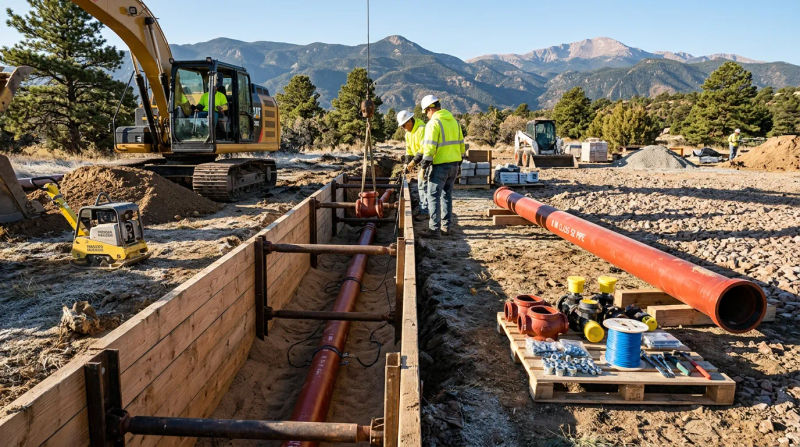
As a Senior Project Superintendent with over 15 years of experience in the field, I know that for homeowners and property managers, the first question about any major project is always about the bottom line: "What is this going to cost?" When it comes to installing an underground fire line, the answer isn't a single number. It depends on a variety of factors unique to your property. My goal here is to provide a transparent guide to help you understand the potential costs and make informed decisions for your project, whether it's for a new build or a retrofit.
We believe that an informed customer is the best partner. This guide will walk you through realistic price ranges in the Colorado Springs area, explain the key variables that drive costs, and empower you with the right questions to ask any contractor you consider hiring.
Average Costs in Colorado Springs
In Colorado Springs, the fire line installation cost can vary significantly based on site-specific conditions. However, to give you a solid starting point for budgeting, it's helpful to look at costs on a per-foot basis. The underground fire main price per foot typically ranges from $175 to $375 per linear foot. This is a wide range, so let's break it down.
For a relatively straightforward 100-foot fire line installation on a property with easy access and cooperative soil, you might be on the lower end of that spectrum, looking at a project cost of around $17,500 - $25,000. Conversely, a more complex project of the same length that involves navigating utilities, breaking through rock, or significant restoration could push the cost toward the higher end, from $28,000 - $37,500 or more.
This price generally includes:
- Project planning and permitting
- Professional excavation and trenching
- Pipe, fittings, and materials
- Installation by a trained crew
- Backfilling and compaction
- Basic site cleanup
What it may not include is extensive restoration of landscaping, driveways, or sidewalks, which is often quoted separately.
Factors That Affect Price
The final price tag is a direct result of the labor, equipment, and materials required for your specific job. From a superintendent's perspective, these are the primary cost drivers our technicians assess during an estimate.
- Trench Length and Depth: This is the most direct factor. A longer line requires more materials and more time for excavation and backfill. In Colorado Springs, trench depth is critical due to frost-depth considerations. While standard water lines have minimum depths, fire lines must comply with strict NFPA (National Fire Protection Association) standards, often requiring trenches to be 48 inches deep or more to ensure the pipe is protected from freezing and surface loads. Deeper trenches mean more soil to move, which increases time and cost.
- Soil Conditions: The Pikes Peak region is known for its variable soil. Some areas have easily excavated loam, while others are filled with dense clay, expansive soil, or large rock deposits. Colorado Springs fire line trenching in rocky ground requires specialized equipment like hydraulic hammers, which operate at a slower pace and have higher operational costs than a standard excavator bucket. This is one of the biggest unknowns until we break ground.
- Site Accessibility and Obstacles: Is the trench path in an open field or squeezed between a building and a retaining wall? Tight access limits the size of the equipment we can use, often requiring more manual labor. The presence of mature trees, extensive landscaping, sprinkler systems, septic fields, and existing underground utilities (gas, electric, data) adds significant complexity and time for careful navigation.
- Building Era Context: Many neighborhoods in our area feature homes built in the 1970s. These split-level and bi-level homes often have established, mature landscaping and extensive concrete work like driveways and patios that may lie in the proposed trench path. An NFPA fire line excavation Colorado Springs project on one of these properties might require more planning for saw-cutting concrete and careful restoration.
- Pipe Material and Diameter: The most common material for underground fire mains is C900 PVC pipe, but some projects may specify ductile iron, which is more expensive. The pipe's diameter, determined by the fire flow requirements for your building, also affects material cost.
- Permitting and Inspections: Proper fire line installation requires permits from the local jurisdiction and is subject to multiple inspections to ensure compliance with NFPA 24 and local codes. These fees are part of the overall project cost.
- Seasonal Timing: In Colorado, the season matters. Scheduling an installation in late October or November, as the first snows threaten, can introduce challenges. Freezing overnight temperatures may require our crews to accelerate backfill and compaction to avoid leaving trenches open or having frozen clumps in the backfill material, which can cause settling issues later. This tighter coordination can sometimes influence project scheduling and cost.
How to Get the Best Value
Getting the best value doesn't mean cutting corners - especially not on a critical life-safety system. It means being efficient and smart with your investment.
- Plan Ahead: Don't wait until the last minute. Rushed projects, especially when winter is approaching, can limit contractor availability and increase costs. Planning in the summer for a fall installation is ideal.
- Get Itemized Quotes: A reputable contractor should provide a detailed, itemized quote that separates costs for excavation, materials, labor, and restoration allowances. This transparency helps you compare different bids accurately and understand exactly what you're paying for.
- Clear the Work Area: You can reduce labor hours by clearing any movable items from the proposed trench path yourself. This includes patio furniture, planters, toys, and other personal belongings.
- Understand the Restoration Plan: Discuss restoration options upfront. A basic restoration might just include backfilling and grading the soil. Full restoration of sod, plants, or concrete will be an additional cost. Knowing the plan helps you budget effectively.
Questions to Ask Your Contractor
Before you sign a contract, you should feel confident in your chosen contractor's ability and professionalism. Here are some questions I recommend asking:
- Are you fully licensed and insured for underground utility work in Colorado Springs?
- Does your quote include all costs, such as permits, materials, backfill, and compaction?
- How do you handle the discovery of unexpected underground obstacles like boulders or unmarked utility lines?
- What is your process for locating and marking public and private utilities before digging?
- What warranties do you offer on your workmanship and the materials used?
- Can you provide a projected timeline and explain how you manage potential weather delays?
- What safety protocols do your crews follow on-site, especially regarding trench safety?
Choosing a contractor is about more than just the lowest price; it's about finding a reliable partner with organized workflows and trained crews who can deliver a safe, compliant installation.
Installing an underground fire line is a significant investment in property and life safety. While the final fire line installation cost depends on many variables, understanding these factors will help you budget properly and select a qualified professional for the job. Our process focuses on clear communication and detailed planning to ensure there are no surprises.
For a personalized estimate on your Colorado Springs fire line trenching project, contact ROG construction LLC for a free consultation. We're happy to walk your property and provide a detailed, itemized proposal.