
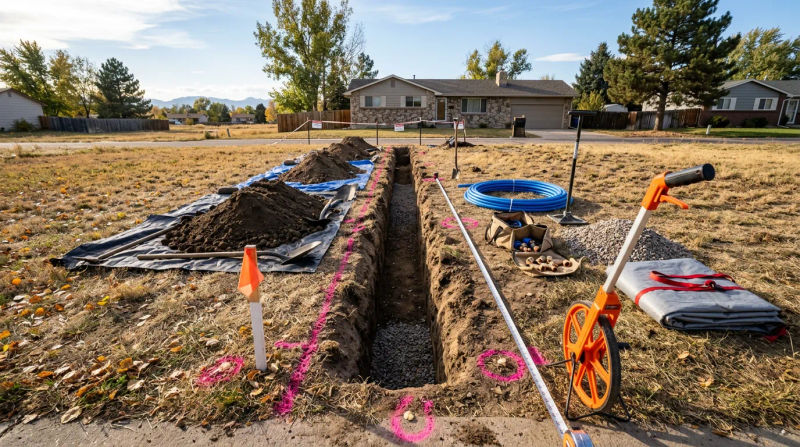
As a Senior Project Superintendent with over 15 years of hands-on experience in the field, I know that when a homeowner faces a water line issue, the first question is almost always: "What is this going to cost?" It's a valid and critical question. The internet is full of simple per-foot estimates, but in my experience, those numbers can be misleading without proper context. My goal here is to provide a transparent, realistic guide to understanding the costs associated with water line trenching, specifically for homeowners here in Aurora, Colorado.
We'll break down the numbers, explore the key variables that influence your final bill, and empower you with the right questions to ask any contractor. A water line project is a significant investment in your home's infrastructure, and you deserve to have clear information to make a confident decision.
Average Costs in Aurora
Let's address the main question first. While a simple cost to trench water line per foot in Aurora is often quoted, it rarely tells the whole story. In our area, projects often involve long service runs from the city main to the house, crossing under driveways or sidewalks, and navigating established landscaping. This makes a one-size-fits-all price impractical.
That said, here are some realistic ranges to help you budget:
- Basic Trenching Cost: For straightforward trenching in soft soil with easy machine access, you might see costs in the range of $50 to $85 per linear foot. This typically covers only the excavation itself.
- Complex Trenching Cost: When the job involves breaking through and repairing concrete, hand-digging around sensitive utilities, or dealing with rocky soil, the cost can climb to $100 to $200+ per linear foot.
For a total water line replacement project, which includes excavation, the new pipe, connections, permits, backfilling, and basic restoration, a typical Aurora homeowner can expect to invest between $5,000 and $12,000. Very long lines or those requiring extensive hardscape restoration can exceed this range.
These figures account for the complete scope of work, which is a much more useful number for budgeting than a simple per-foot digging rate. The final price depends heavily on the specific factors at your property.
Factors That Affect Price
Understanding the variables is key to understanding your estimate. These are the primary water line excavation bid factors in Colorado that our crews assess during a site visit. Every project is a unique combination of these elements.
- Trench Depth and Length: The City of Aurora requires water lines to be buried below the frost line to prevent freezing - typically at least 5-6 feet deep. The longer the distance from the city connection to your home, the more labor and time are required.
- Soil Conditions & Accessibility: Digging in soft loam is much faster and easier than excavating dense clay or rocky Colorado soil, which may require specialized equipment. Furthermore, can we get a mini-excavator into your yard? Tight spaces, fences, and backyard sheds might necessitate more expensive and time-consuming hand-digging.
- Surface Restoration: What we have to dig through has a major impact on the cost. This is one of the most significant variables. Your estimate should clearly itemize the restoration of:
- Asphalt or Concrete: Driveways and city sidewalks require saw-cutting, removal, and professional replacement.
- Landscaping: This includes saving and replacing sod, repairing sprinkler systems, and working around mature trees and garden beds. Many of our classic 1960s-era homes in Aurora have beautiful, established landscapes that require careful work.
- Patios and Pavers: These materials must be carefully removed, stored, and re-leveled after the trench is backfilled.
- Utility Crossings: Before any digging begins, we perform a utility locate to mark all existing gas, electric, fiber, and sewer lines. Excavating around these critical services requires precision and care, slowing down the process to ensure safety.
- Seasonal Conditions: As we head into October and November, the first snows and freezing overnight temperatures become a factor. Frozen ground is harder and slower to excavate. While work can certainly continue, it may require more time or specialized ground-thawing equipment. It can also mean that final landscaping restoration, like laying sod, may need to wait until spring.
- Permitting and Inspections: Proper Aurora water service line trenching requires permits and inspections to ensure the work is done to code. These administrative costs are typically included in a professional contractor's bid.
How to Get the Best Value
Getting the best value isn't about finding the cheapest price; it's about securing high-quality, durable work for a fair price. A botched job can lead to costly future repairs, settling, or even damage to other utilities.
- Insist on a Detailed, Itemized Bid: A lump-sum price can hide shortcuts. A quality bid will break down costs for labor, materials, permits, and each type of surface restoration. This transparency allows you to compare apples to apples.
- Plan Ahead When Possible: If you know your water line is old or failing, addressing it before it becomes a catastrophic emergency can save you money. Emergency call-outs often come with a premium.
- Bundle Excavation Work: If you're considering other underground projects, like running a gas line for a BBQ or installing a new sewer line, doing all the excavation at once can provide significant savings.
- Understand the Crew and Process: A company that invests in trained crews and has organized, standardized workflows is more efficient. This reduces wasted time on the job site, which translates into better cost control and a smoother project for you.
Questions to Ask Your Contractor
When you receive a bid, you are hiring a team to perform a complex task on your property. Use these questions to vet their professionalism and expertise.
- Are you fully licensed and insured for excavation and utility work in the City of Aurora?
- Does your quote include all associated costs? (Specify permits, spoils disposal, and all surface restoration.)
- What is your safety protocol for locating and working around existing utilities?
- How do you handle backfilling and compaction? (Proper compaction is crucial to prevent your yard or driveway from sinking later.)
- What is your plan for protecting my property and minimizing disruption?
- What kind of warranty do you provide on your workmanship and the materials used?
- How will you manage potential weather delays, especially with winter approaching?
A confident, experienced contractor will have ready and thorough answers to these questions.
Your Next Steps
Navigating a major home repair like a water line replacement can feel overwhelming, but being informed is the best way to manage the process. The total water line trenching cost is a sum of many parts, from soil conditions to sidewalk repair. By understanding these factors, you can better evaluate the bids you receive and choose a contractor who offers true value and lasting quality.
Our technicians are experienced in handling the unique challenges of projects in this area. For a personalized estimate in Aurora, contact ROG construction LLC for a free consultation. We can provide a detailed, site-specific quote that accounts for all the variables at your property.